
Upcoming intakes 1 classes open
- Starts 29/10/2026BIM Manager Hạ Tầng Kỹ Thuật ONOnline
Schedule 20h00-22h00 các thứ 3,5,7
Venue Online - Toàn Quốc
Tuition fee Students 3,050,000 VND·Engineers 3,600,000 VND·8 sessions
About this course
This infrastructure BIM course is RDSIC's eight-session BIM Manager programme for roads, bridges and drainage — taught live over Microsoft Teams or delivered in-house.
Infrastructure projects behave very differently from buildings: works stretch along alignments, are tied to survey coordinates, and combine disciplines such as roads, bridges, drainage, power supply and landscaping. A BIM Manager on this kind of project needs specific model criteria and a specific way to organise data. This course from the RDSIC training centre of the Institute of Information Technology in Civil Engineering — Hanoi University of Civil Engineering (HUCE) was built for exactly that need.
Across eight online sessions you move from BIM foundations and writing a BIM Execution Plan to operating a common data environment on Autodesk Forma, setting LOD criteria for each infrastructure asset type, structuring model files, and coordinating clash resolution with Navisworks or Model Coordination in Autodesk Forma. Exercises follow the documentation of a real infrastructure alignment.
What you will learn
- Write a BIM Execution Plan for a technical infrastructure project
- Operate a common data environment on Autodesk Forma: storage, permissions, submissions and approvals
- Set LOD criteria and assess road, bridge, drainage and landscape models
- Structure and split model files by discipline and set up team collaboration
- Control survey coordinates, project orientation and naming, colour and layer conventions
- Coordinate clash detection and resolution with Navisworks or Model Coordination in Autodesk Forma
Who should enrol
- Road, bridge, drainage and urban infrastructure engineers on BIM-mandated projects
- Staff of infrastructure project management units reviewing consultant models
- Civil 3D and Revit users stepping into model management and coordination
- Infrastructure design consultancies building an internal BIM workflow
Detailed syllabus
1. BIM foundations for technical infrastructure
- What BIM is and its place in the infrastructure sector
- Common specialist terminology
- BIM applications across project phases
- Roles of the parties in a BIM workflow
- Gains and difficulties when adopting BIM
- Working environments, platforms and popular software
- Legal documents and BIM standards in Vietnam
- Drafting the BIM Execution Plan (BEP) for a project
2. Data management and model control
- Building a common data environment (CDE) for an infrastructure project
- Autodesk Forma (Data Management, Build): data storage and project administration
- Access permissions and member management
- Submission and approval flows for models and drawings
- Tracking RFIs and construction progress
- Generating automatic reports from the platform
- Navigating models with Autodesk Viewer and Autodesk Drive
- LOD assessment criteria for road models
- Assessment criteria for bridge and structural models
- Assessment criteria for utility models: drainage, power
- Assessment criteria for landscape models
- Checking drawings and quantities taken from the model
3. Organising and structuring BIM models
- File splitting: the federated model and discipline models (road, bridge, MEP, landscape)
- Team collaboration with Worksharing or Forma Design Collaboration
- Setting the Survey Point for the project
- Checking and correcting project orientation
- Unified naming, colour and layering conventions
4. Model coordination and clash resolution
- The clash matrix: priorities and responsibility for fixes
- Multi-discipline 3D coordination sequence
- Assembling the coordination model in Navisworks or Model Coordination in Autodesk Forma
- Clash detection and classification
- Exporting coordination reports and monitoring fixes
Learning format
The course runs over eight sessions. Infrastructure staff are usually posted to sites spread across the provinces, so the online class is the primary format here:
- Online — Sessions run live on Microsoft Teams at set hours, not as recordings. You listen and work on your own machine at the same time and can raise a problem the moment it appears; anyone caught on shift still keeps up through the per-session recordings.
- At your company — Project management boards and infrastructure contractors can bring the instructor in-house, using the road or urban development currently under construction as the case study and building a model-coordination procedure for the whole team. Session count is agreed in advance; fees follow the scale of the group.
- On campus — In-person classes in Hanoi and Ho Chi Minh City, opening on a regular intake schedule. The next intake is listed in the schedule section above.
All three formats follow one syllabus, one set of sample alignment documents, the same post-course support and the same certificate.
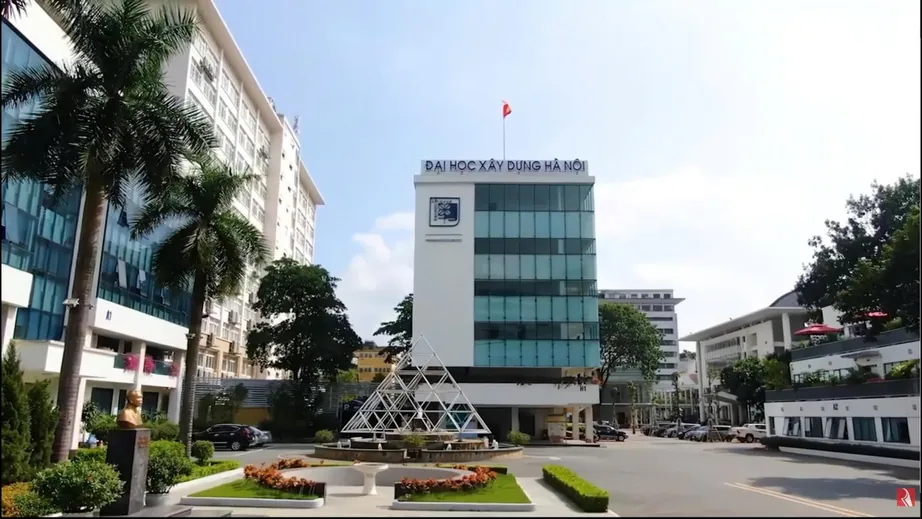
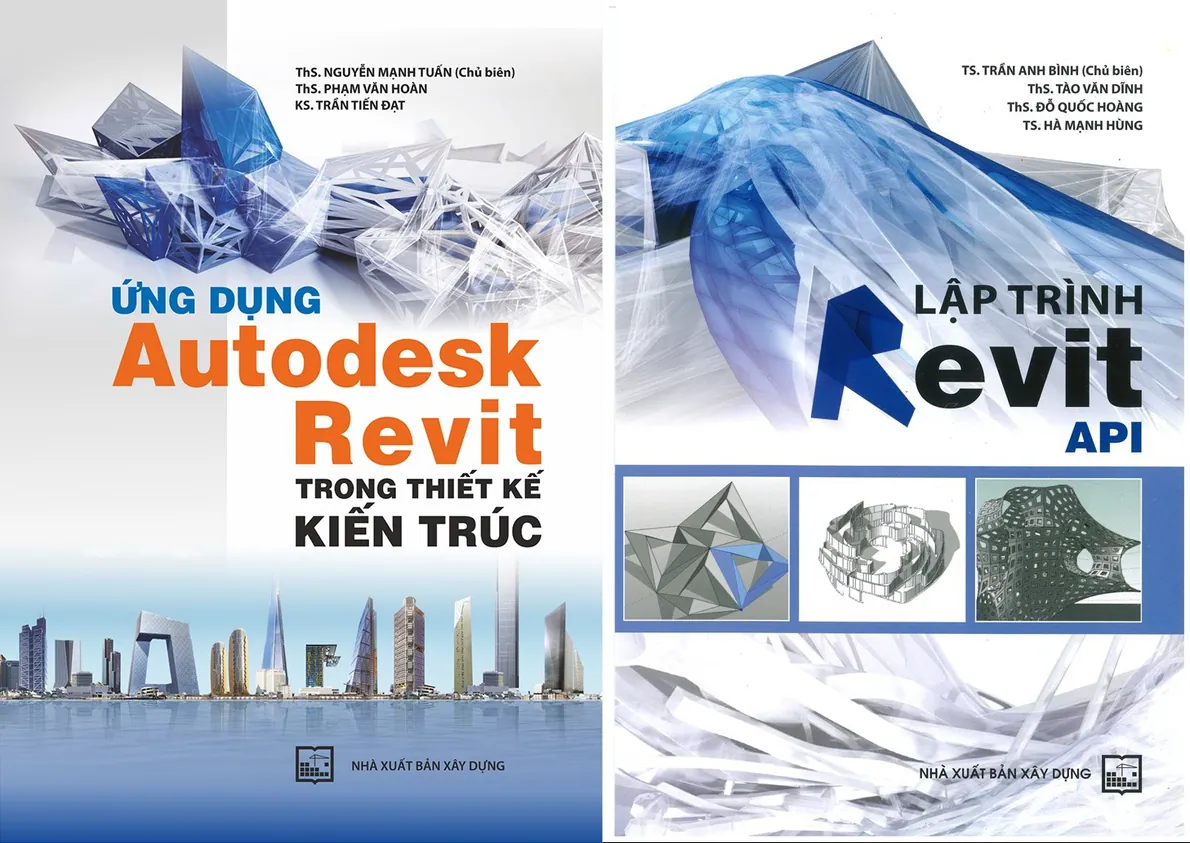
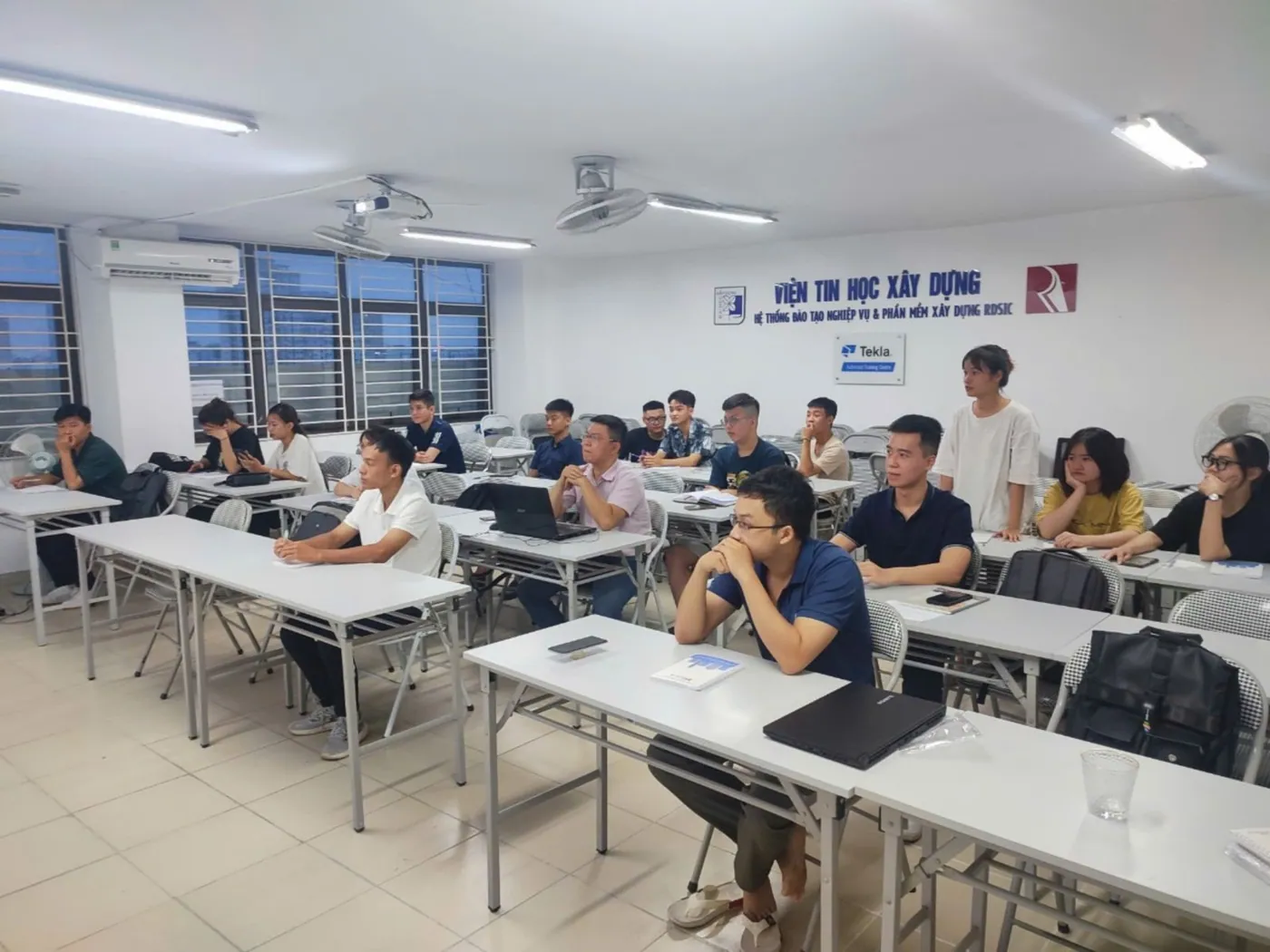
Class photos and videos



Certificate of completion
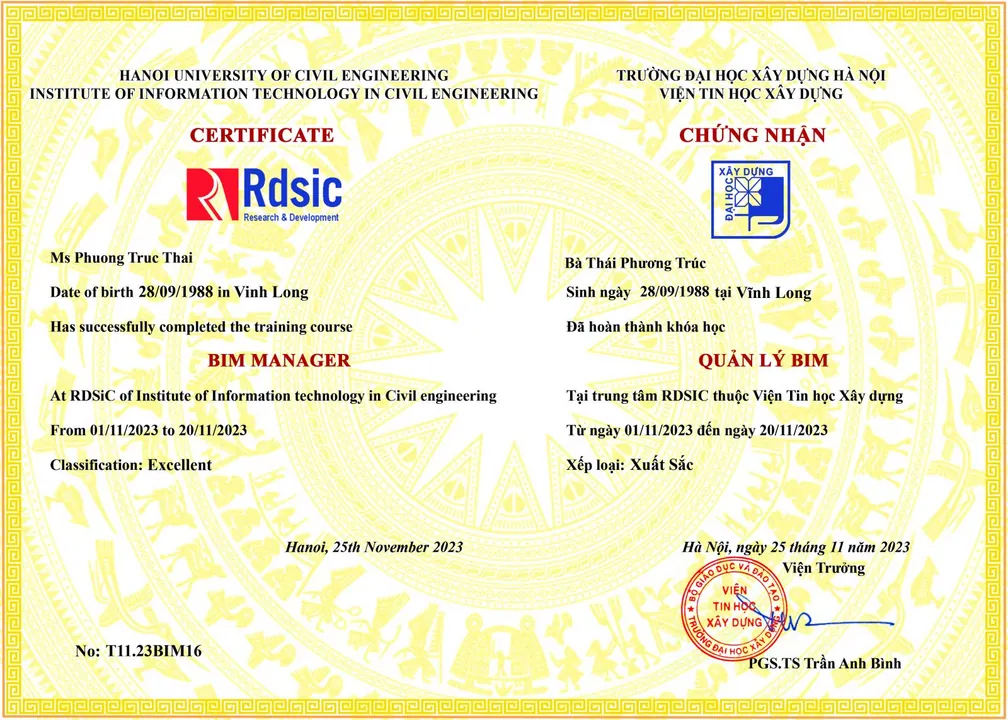
Learners who complete the programme receive a certificate from the Institute of Information Technology in Civil Engineering — Hanoi University of Civil Engineering (HUCE). Call 0989 427 809 or 0914 388 841 for advice before enrolling.
Promotions and discounts
Group tuition discount — applied to every group member and the group leader:
| Group size | Group members | Group leader |
|---|---|---|
| 2 people | 5% off | 10% off |
| 3 people | 5% off | 15% off |
| 4 people | 5% off | 20% off |
| 5 people | 10% off | 25% off |
| 7 people | 10% off | 30% off |
| 10 people | 10% off | 50% off |
| 15 people | 10% off | 70% off |
| 20 people | 20% off | 100% off |
Note: this discount cannot be combined with any other promotion.
Discounts for taking multiple courses at RDSIC
- Take two courses in parallel and get 10% off the tuition of each course.
- Your second course at RDSIC is 10% off.
Deferral policy
- In-person courses: deferral of up to one year from the date the centre confirms it.
- Online courses: no deferral; as an exception, students who have attended less than 50% of the course may be granted a deferral of up to one year.
Related courses
- BIM Manager Course
- Civil 3D Course – Infrastructure & Road BIM
- Revit Architecture Course (BIM for Architects)
- Revit Structure Course (BIM for Structural Engineers)
Browse the full list at Construction Courses.